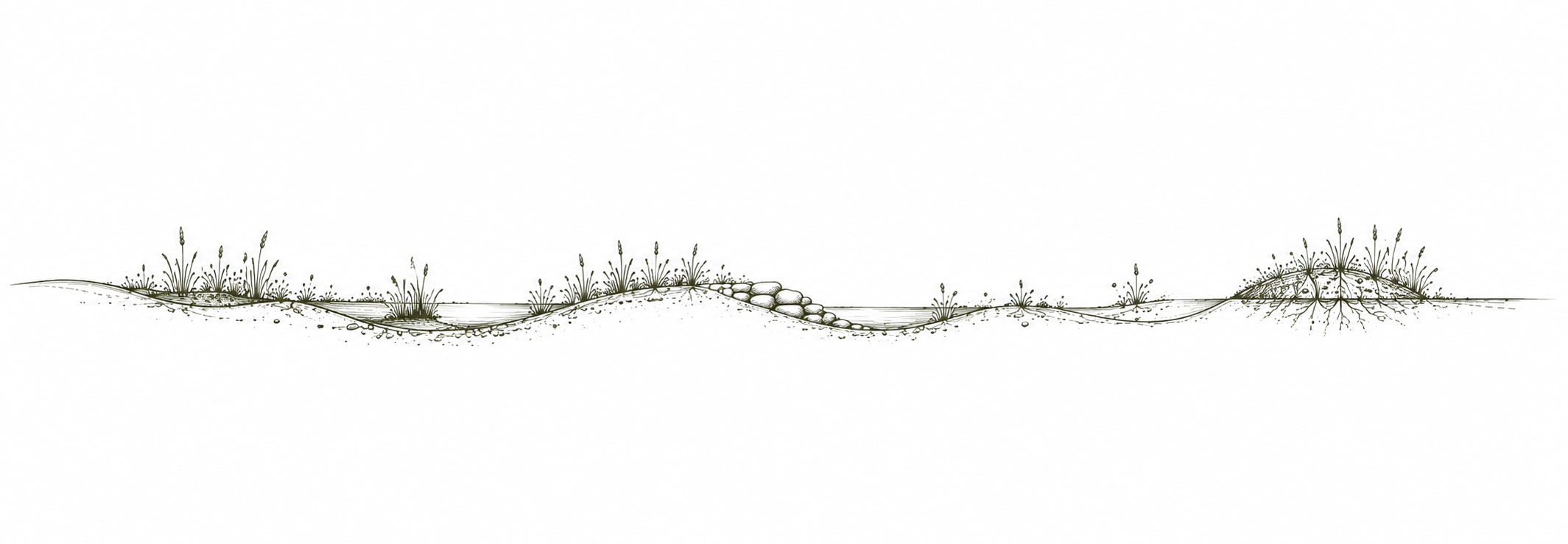

SuDS & Catchment Design
Flooding, drought and water quality are often treated as separate challenges.
In reality they are symptoms of the same landscape system. Water moves through soils, wetlands, rivers and floodplains as one connected process. When those natural pathways are disrupted, landscapes become less able to absorb rainfall, store water and maintain healthy ecosystems.
Water21 works with the movement of water through the landscape rather than against it. By restoring natural function and integrating water management with land use, it is possible to control flooding, improve water quality, increase drought resistance and create wider benefits for climate, resources productivity, communities and nature.
The goal is not simply to manage water. It is to create resolved landscapes that function well as a whole.
Flooding, drought and pollution are often described as separate crises.
Yet each begins with the same question:
How does water move through the landscape?
When landscapes function well, water is slowed, stored, filtered and shared.
The challenge is reinventing systems that work with natural processes, enhancing these at every stage.

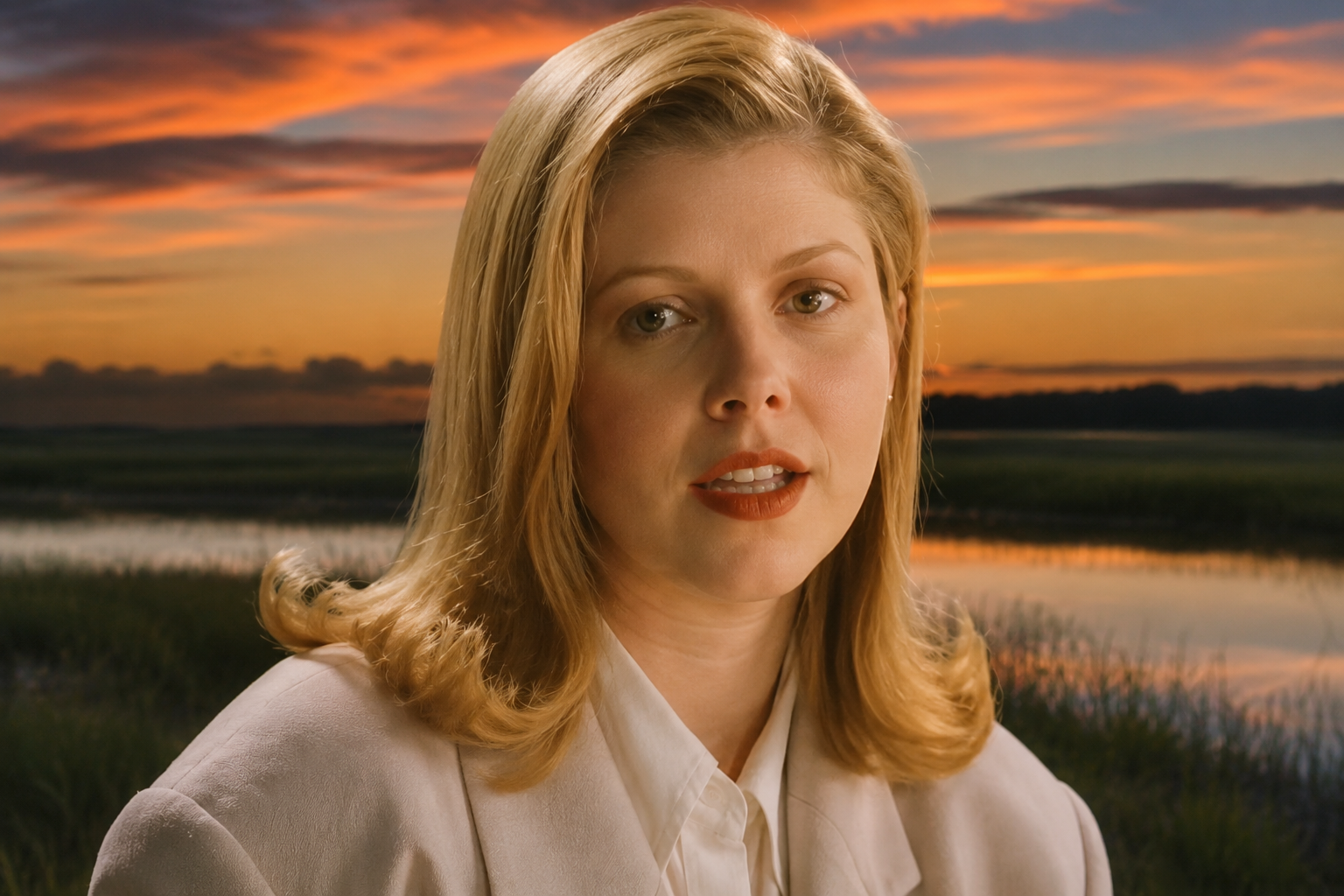
1991 — A National Conversation BBC TV
Byline – Don’t Go Near the Water
In 1991, singer-songwriter Kirsty MacColl presented a BBC documentary exploring the condition of Britain’s rivers and alternatives to conventional wastewater treatment.
The programme introduced to a national audience the potential of constructed wetlands and landscape-based water management at a pivotal moment in the history of the UK water industry, immediately following privatisation.
For programme co-producers Water21, it marked the point where our ideas developed through practical engineering began entering the wider public conversation.
Churchdown Ponds
Following initial discussions with Water21 for their planning process (which highlighted a big loss of ponds, as housing development replaced local farmland) Churchdown Council decided to build an attenuation pond on a flood prone area of a council park.
Unfortunately, the location was sited at the end of the runway of a busy airport; who objected to a feature that would dangerously attract ducks and geese into a busy flight path.
Water21 were called back to resolve this problem. See our report that gained planning permission and Environment Agency approval for construction.


Living Water Infrastructure
Private Estate, transforming wastewater into landscape value.
For more than 35 years, this living landscape has demonstrated that wastewater can become a resource rather than a disposal problem.
Designed to serve a large rural estate, the system uses phytoremediation—the combined action of plants, soils and microbial communities—to naturally cleanse wastewater while rebuilding ecological health.
The result is more than clean water. It produces renewable biomass, stores carbon, creates wildlife habitat and continually improves the landscape it serves.
200-person capacity • 35+ years continuous operation
Natural water purification • Renewable biomass • Biodiversity gain • Carbon storage
From Claypits to Sudan
Water21’s work spans local demonstration projects, private estates and international projects, but each began with the same question:
What happens when we design with the landscape instead of against it?
The answer has been remarkably consistent. Living systems can clean water, rebuild soils, reduce flooding, restore biodiversity, support productive agriculture and create lasting value for communities.
These are not isolated projects. They are chapters in a forty-year body of evidence showing that landscapes themselves can become infrastructure, even when dealing with some of the most toxic waste.
Sudan projects at 9 locations developed & installed with Dr Lucian Gill.


Slad Flood Alleviation
Following severe flooding in 2007 Water21 was commissioned by community groups, Environment Agency, Stroud District Council and Gloucestershire County Council to devise flood attenuation in the Slad Valley.
Water21 funded and mentored 12 postgraduate dissertation studies and internships to answer all technical queries for our longstanding proposals; including the first ever hydrographic model to enable upstream attenuation and storage of stormwater.
Water21: Tipping the Tipping Points
Institution of Civil Engineers | 2025
In this Institution of Civil Engineers lecture, Julian Jones challenges conventional approaches to flood, drought and water pollution, arguing that these are interconnected symptoms of a landscape that has lost its natural ability to store, filter and regulate water. Drawing on four decades of practical engineering, the presentation outlines a systems-based approach to designing healthier catchments and more resilient communities.


When Will the Salmon Return to Salmon Springs?
Stroud | 1989
Produced for the inaugural Stroud Valleys Project exhibition, this early documentary investigates the disappearance of salmon from Stroud’s rivers and asks what it would take to bring them back. The film examines the impacts of sewage pollution, river engineering and habitat loss, while proposing practical solutions including constructed wetlands (reed beds) and small-scale hydropower. More than three decades later, its central message—that healthy rivers depend on healthy catchments—remains as relevant as ever.
Rednock School SuDS
Water21 Recovers £135,000 in Surface Water Drainage Charges
Water21 supported Rednock School in Dursley during a four-year negotiation to recover £135,000 in surface water drainage charges that had been incorrectly levied by the water company.
The school was equipped with a Sustainable Drainage System (SuDS), including a reed bed, pond and swale, designed to capture, store and naturally treat surface water on site. Because rainwater was managed within the landscape rather than discharged into the public sewer, Water21 argued that the charges were unjustified.
The case demonstrated how well-designed SuDS can deliver environmental benefits while also reducing long-term operating costs for schools, businesses and communities. Picture credit Illman Young


Catchments & Carbon
6 minute film
Healthy catchments are one of our greatest carbon stores. This short film explains how water, soil biology and vegetation work together to capture carbon, improve water quality and build resilient landscapes. Rather than treating carbon as an isolated climate issue, Water21 presents it as the outcome of functioning natural systems—where restoring the water cycle also restores biodiversity, productive soils and long-term community resilience.